
How to Safely Buy a Luxury Watch Online and Assess Its Value
Posted by Luxury of Watches on 9th Nov 2026
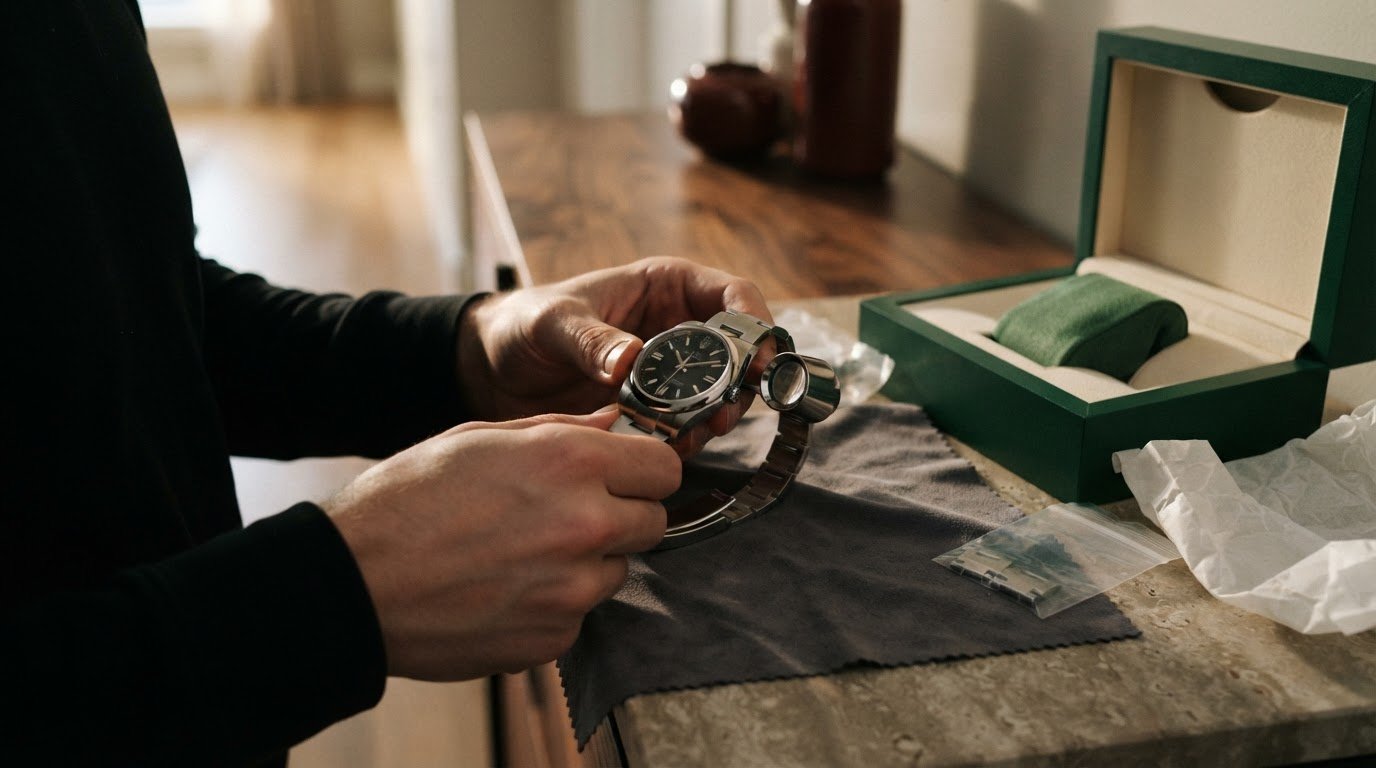
A pre-owned luxury watch can be a sound purchase when its condition and history are clear. To learn how to safely buy a luxury watch online, assess the specific watch, its service history, provenance, included box and papers, and intact, verifiable serial numbers. The listing should also disclose visible wear, known service needs, and any changes from factory originality.
It’s reasonable to want more than polished photographs before making a high-value purchase. A watch’s appeal matters, but so do the details that help you assess its authenticity, condition, and care needs. This guide explains what to look for in a pre-owned listing, how to review service and inspection records, and what the box, papers, and serial numbers can tell you. You’ll also learn how authentication, return terms, and after-sales support fit into a considered decision, so you can weigh the watch’s condition and documentation before buying.
Key Takeaways
- Assess whether the listing clearly represents the exact watch for sale, including its condition, originality, and authentication.
- Use service records and inspection details to understand the watch’s maintenance history and potential care needs.
- Evaluate provenance, box and papers, and serial numbers together to build a clearer picture of the watch’s history and completeness.
- Judge value by weighing condition, documentation, model, and seller support rather than relying on appearance alone.
Are pre-owned luxury watches worth buying?
A pre-owned watch can be a considered purchase when its authenticity, condition, and terms of sale are clear. Follow these steps before committing.
-
Check authenticity and warranty eligibility
Ask for clear images of the exact watch, including its dial, case, movement, and serial number. Compare its details with the manufacturer’s information for that model, and look for unexplained differences or altered serial numbers. A mechanical watch’s appearance alone can’t establish authenticity. Ask whether manufacturer warranty coverage applies and request the relevant documentation; Rolex has offered a five-year warranty since 2015, but that fact alone doesn’t establish eligibility for a specific pre-owned watch.
-
Review seller authentication and transparency
Choose a seller that explains its authentication process and provides a written description of condition, originality, and known service needs. Confirm that the photographs show the actual watch for sale, not a representative model. Review the return terms and after-sales support before paying. Protect your account with a unique password and enable two-factor authentication where available. When supported, an authenticator app is preferable to SMS.
-
Compare prices and review import requirements
Compare the asking price with pricing for the same model from authorized dealers, accounting for age, condition, originality, and included accessories. A pre-owned watch may be priced differently, but a lower price alone doesn’t establish value. In the United States, sales tax, customs duties, and import rules depend on the transaction and shipment. Before paying, get written details of charges collected at checkout and any due on delivery. Don’t assume the listing price includes them.
-
Assess marketplace and private-seller risks
Use a payment method with a clear dispute process, such as a credit card or a marketplace’s protected checkout, and review its terms. Avoid irreversible payment requests if the seller’s identity or watch documentation raises concerns. Choose tracked shipping, insurance covering the watch’s declared value, and signature-required delivery. Confirm what the insurance covers, and keep the listing, payment receipt, and shipping records. Private sales may provide less structured authentication, return support, or recourse than transactions with established sellers.
Service history and watchmaker inspections
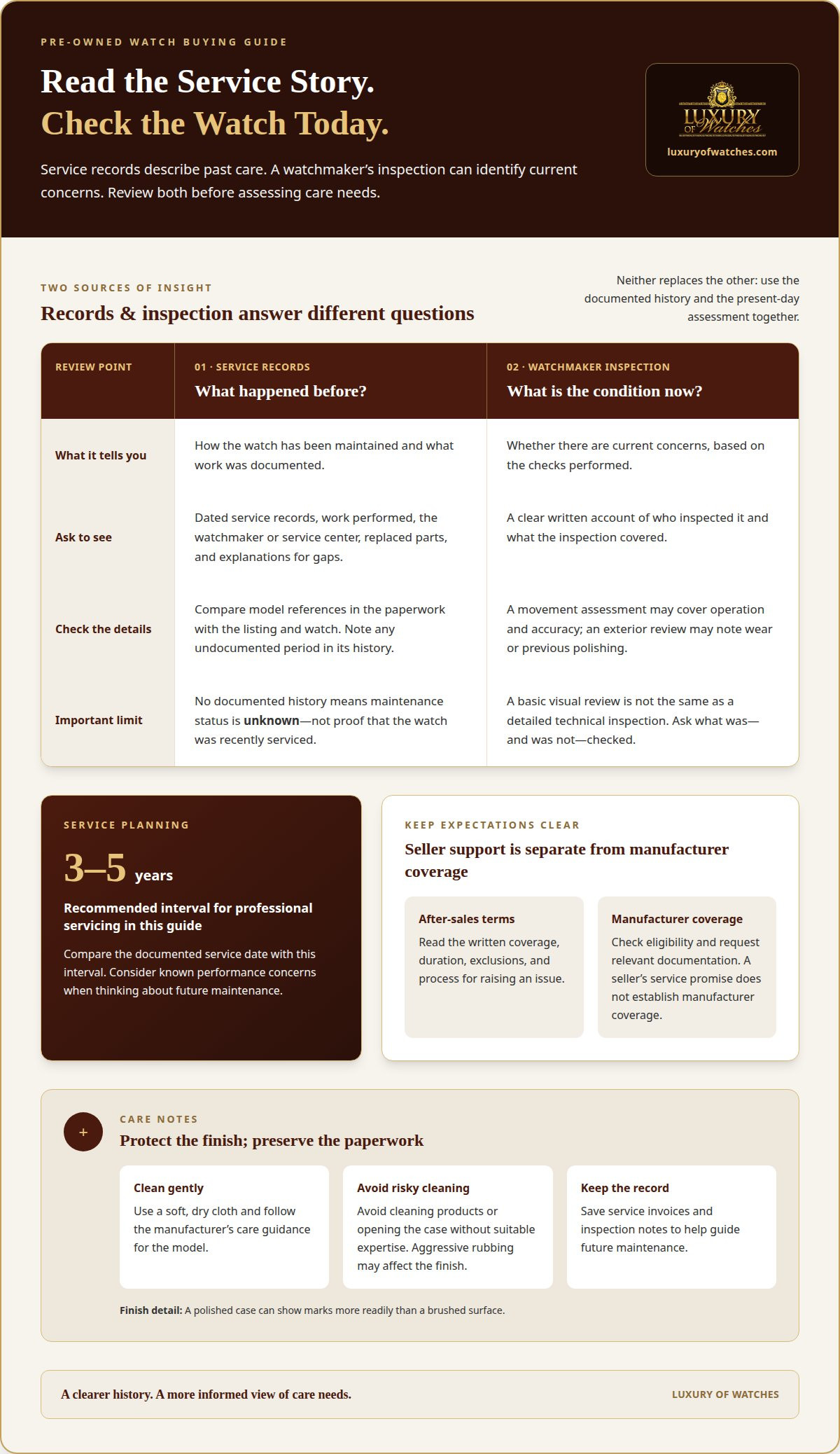
Service records show how a watch has been maintained, while an inspection can identify current concerns. Review both to assess its care needs.
- Request dated service records and explanations for any gaps. Look for details of the work performed, the watchmaker or service center, and any replaced parts. Compare the model references in the paperwork with those in the listing. If there’s no documented history, treat the watch’s maintenance status as unknown rather than assuming it was recently serviced.
- Ask whether a qualified watchmaker inspected the watch and what the inspection covered. A movement assessment may address operation and accuracy, while an exterior review can note wear or previous polishing. These are different checks. A clear written account helps distinguish a basic visual review from a more detailed technical inspection.
-
Understand after-sales service
Before buying, read the written after-sales terms for coverage, duration, exclusions, and how to raise an issue. Clarify whether the coverage addresses mechanical faults, inspection findings, or another defined matter. Don’t confuse a seller’s service promise with manufacturer coverage, as they are separate terms. Keep the relevant documents with your receipt and watch records.
-
Consider servicing and longevity
Use the service history to plan care, not to assume a specific lifespan. Mechanical watch oils can degrade, parts can wear, and accuracy can drift over time. This guide recommends professional servicing every three to five years. Compare the watch’s documented service date with that interval, and consider any known performance concerns when assessing future maintenance needs.
- Gently clean the exterior with a soft, dry cloth, and follow the manufacturer’s care guidance for the model. Avoid applying cleaning products or opening the case without suitable expertise. A polished case, for example, can show marks more readily than a brushed surface, so aggressive rubbing may affect its finish. Keep service invoices and inspection notes to help guide future maintenance.
Provenance, box and papers, and serial numbers
Review the watch’s history and included items together. No single document establishes its full provenance. A careful provenance review is one part of how to safely buy a luxury watch online.
- Ask whether the watch is sold as a full set or watch only. A full set may include the box and papers, while a watch-only listing may include neither. Have the seller identify each included item in writing. This clarifies what comes with the watch without treating accessories as proof of authenticity.
- Request photographs of the papers, including any warranty card or dated sales document. Compare the model and identifying details with the watch and listing. Names or dates can help establish a timeline, but paperwork should be considered alongside the timepiece itself. Ask for an explanation before buying if a document appears mismatched.
- Ask the seller to confirm that the serial numbers are intact and verifiable. Request a clear image of the relevant number and compare it with any paperwork bearing the same identifier. Don’t rely on a number alone: assess it alongside the watch’s condition, records, and the seller’s account. Treat listings that obscure serial details without explanation with caution.
- Build a simple provenance timeline from the available records. Note documented ownership or sale history, service papers, and dates, then identify gaps that affect your understanding. A service receipt, for example, can link a documented inspection to a particular period. When deciding how to safely buy a luxury watch online, keep this timeline factual and distinguish records from assumptions.
- Check that the watch’s physical details match the listing and documents. Compare the dial, case, bracelet, and clasp with the photographs and stated model. Ask for close-up images if an important detail is hidden by an angle or reflection. A box may have been replaced or a bracelet changed, so note disclosed differences rather than assuming every component is original.
Whether pre-owned watches are worth buying
A pre-owned watch can have lasting appeal, but its value depends on condition, originality, and demand. Assess the individual watch, not just its brand.
- Decide what value means for your purchase. For daily wear, prioritize comfort, legibility, and a condition you’re comfortable using. For collecting, consider originality, provenance, and how the model fits your collection. Mechanical watches also need maintenance, so include documented service history in your assessment. A compelling design alone doesn’t make a particular example a sound buy.
- Compare examples of the same model and reference, then account for their differences. Luxury watches from brands such as Rolex, Patek Philippe, and Audemars Piguet can vary in value from one example to another. Condition, originality, completeness, and service history all affect how a specific watch compares with similar pieces.
- Distinguish signs of wear from issues that affect value or future care. Scratches, polished surfaces, replacement components, and disclosed service needs each tell a different story. A replacement bracelet, for example, may affect originality, while visible wear may simply reflect use. Weigh each detail against the listing description and photographs rather than treating every mark as a defect.
- Judge the substance of a listing, not its presentation. Check that the photographs show the actual watch and that the description covers wear, originality, and known service needs. Clear return terms and after-sales support matter because they define what happens after purchase. Pause if pressure tactics claim another buyer is waiting or the price will rise the next day.
- Decide only after weighing the watch’s strengths against its compromises. A complete set may appeal to collectors, while a watch-only example may suit someone focused on wearing it. Neither option automatically determines value. The right choice depends on your intended use, the watch’s documented condition, and whether its overall presentation matches your priorities.
Luxury of Watches
Luxury of Watches offers pre-owned luxury watches, including Rolex, used Rolex, and Breitling watches. It’s a natural next step when you’ve weighed a watch’s condition, records, and documentation and are ready to consider a purchase. Its authentic watch selection includes a five-year in-house warranty, giving buyers a stated point of after-sales coverage to review alongside each watch’s details. This is in-house coverage, not a manufacturer’s international warranty. Compare the watch’s description and accompanying information with the priorities you established: model, condition, originality, and intended use. If you’re ready to discuss your next step, contact Luxury of Watches.
Make your next purchase with clarity
Buying a luxury watch is also a choice about how you want to wear and enjoy it. Before deciding, consider whether the model suits your routine, whether its condition meets your expectations, and what ownership experience you want. This helps turn the details you’ve reviewed into a decision based on your priorities.
Knowing how to safely buy a luxury watch online means assessing the individual watch, not just the name on its dial. Luxury of Watches offers Rolex watches, used Rolex watches, and pre-owned luxury watches for buyers considering a pre-owned timepiece. Explore the collection to find a watch that suits your preferences and expectations for ownership.
Ask Luxury of Watches about your purchase, and move forward with a considered choice.
Frequently Asked Questions
How can I tell if a luxury watch is authentic?
Assess authenticity through several matching details, not appearance alone. Compare the model reference, case, dial, movement information, and serial number with reliable documentation for that specific watch. An inconsistent reference or altered serial number, for example, warrants careful scrutiny. Request clear, current photographs and a written description. If uncertainty remains, consider an independent watchmaker’s inspection before buying.
How long is the warranty and what does it cover?
Luxury of Watches offers a five-year in-house warranty on select brand watches. It covers the movement, functionality, and manufacturing defects; the battery is excluded. This is separate from a manufacturer’s international warranty and doesn’t apply to every brand. Review the warranty document for the specific watch to understand the terms, exclusions, and coverage that apply to your purchase.
What is the after-sales procedure?
If an issue arises, review the warranty and purchase documents, then contact the seller’s customer support with your order details. Describe the problem clearly and keep relevant records, including the receipt, warranty paperwork, and any inspection findings. For a mechanical concern, explain what you’ve observed, such as a change in operation or accuracy, rather than opening the case or attempting an adjustment yourself.
How can I verify an online luxury watch seller is reputable and authorized?
A seller’s reputation and manufacturer authorization are separate matters. Review the seller’s stated business identity, written sales and return terms, and warranty information. If manufacturer authorization matters to you, consult the manufacturer’s dealer resources. Don’t assume that selling a brand means a retailer is manufacturer-authorized. Clear distinctions between in-house and manufacturer coverage help you understand who stands behind the transaction. For broader insights into how digital retailers maintain operational standards and security, jewelryecommerce.com covers the technology and business practices shaping the online jewelry industry.
How do I authenticate a luxury watch before buying it online?
Before paying, compare the listing’s reference and identifying details with the watch photographs and available paperwork. Request additional views of details that are difficult to assess, such as the clasp or case finish. If an image-based review leaves questions, a qualified watchmaker can inspect the watch in person, including its movement. Authentication is strongest when the physical details, records, and seller information align.
What documents and accessories should come with a pre-owned luxury watch?
Ask for an itemized list of what the specific sale includes. Depending on the watch, this may include its box, papers, warranty card, manuals, service receipts, and spare bracelet links. These items can document the purchase and support a clearer ownership record, but a complete set alone doesn’t authenticate a watch. Check that the photographs and written inventory show the same accessories.