
Buying a Pre-Owned Watch With Service History: Assess Its Value
Posted by Luxury of Watches on 26th Oct 2026
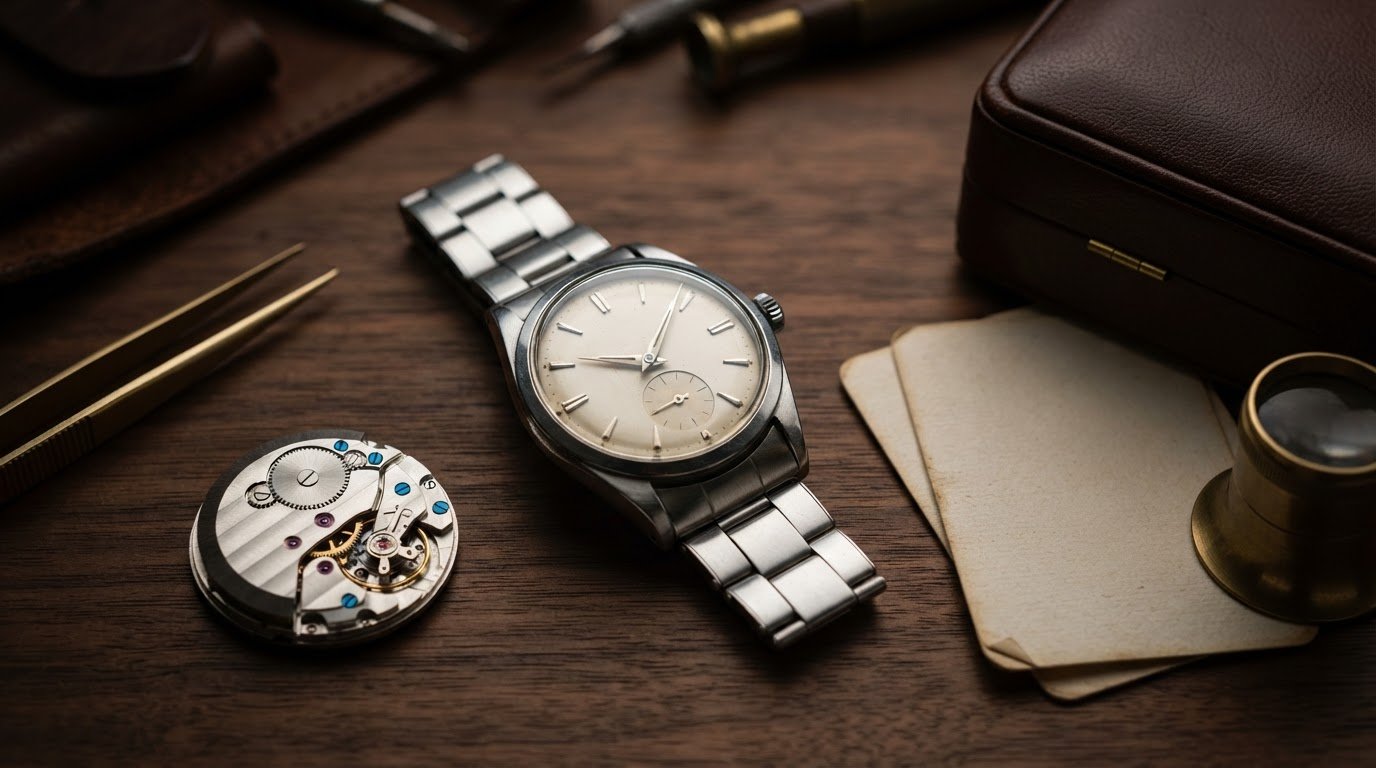
Box and papers can support a pre-owned watch’s provenance, but they don’t tell the whole story. When buying a pre-owned watch with service history, assess the records alongside authenticity, condition, and model desirability. Documentation can add confidence and context, but it cannot replace an examination of the timepiece.
It’s natural to focus on a complete set of original documents, especially for a significant purchase. Service records can show routine maintenance and past repairs. The case, crystal, bracelet, dial, and movement also reveal how the watch has been cared for and whether its parts appear consistent with the model.
This guide explains how to assess service records, what box and papers can and can’t establish, and which signs of condition or modification may affect value. It also shows how to compare a brand and model with the current market, helping you judge the watch’s history and present condition before you decide.
Key Takeaways
- Read service records for maintenance and repair details, then compare them with the watch’s condition and documented history.
- Use serial and reference numbers, original documents, and an inspection of key components to assess authenticity.
- Compare the exact model, condition, and included accessories when judging desirability and market value.
- Inspect the case, crystal, bracelet, movement, and functions to spot wear or modifications that could affect value.
1. Authentication and independent inspection
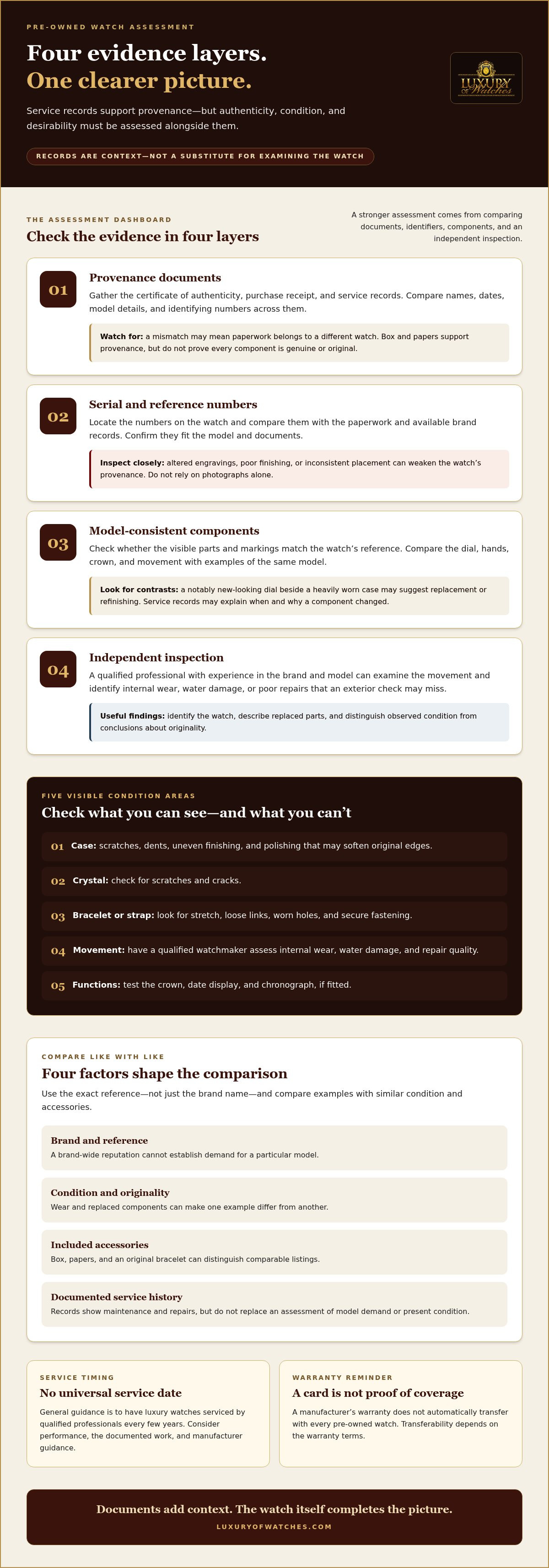
Start with provenance: gather the certificate of authenticity, purchase receipt, and service records. These documents can help establish where the watch came from and what work it has received. Compare names, dates, model details, and identifying numbers across the records. A mismatch deserves attention because paperwork may belong to a different watch. Box and papers can support a purchase, but they don’t prove that every component is genuine or original.
Next, locate the serial and reference numbers on the watch and compare them with the paperwork and available brand records. Check that the numbers match the model and documents, and look closely for signs of alteration around the engravings. A changed or poorly finished number can weaken the watch’s provenance. Don’t rely on photographs alone: inspect the markings clearly and compare their placement and finish with examples of the same reference.
Inspect the components that define the model. The dial, hands, crown, and movement should be consistent with its reference, including their design and visible markings. For example, a dial that looks unusually new beside a heavily worn case may have been replaced or refinished. That doesn’t automatically make the watch counterfeit, but undisclosed non-original parts can affect authenticity and value. Service records may explain when and why a component was replaced.
Arrange an independent inspection before purchase, especially if records leave gaps or the watch has visible alterations. A qualified watch professional can examine the movement and look for internal wear, water damage, or poor repairs that an exterior check may miss. Choose a reputable dealer or an independent verifier with experience in the watch’s brand and model. Ask for findings that identify the watch, describe any replaced parts, and distinguish observed condition from conclusions about originality. This combined review of documents, serial and reference numbers, and physical components provides a stronger basis for judging authenticity than any single piece of evidence.
2. Brand and model desirability
A prestigious name alone doesn’t establish a pre-owned watch’s desirability. Compare the exact brand and model, then narrow the comparison to its reference, condition, and included accessories. A Rolex with its original bracelet and papers may attract different interest from the same reference with replacement parts. These details affect how closely a listing matches what collectors seek.
Some Rolex and Audemars Piguet watches have a history of increasing in value, particularly when rare or in excellent condition. That makes the individual reference important. A brand-wide reputation cannot tell you whether a particular model has lasting demand. Consider rarity, design, condition, and completeness together rather than treating one attribute as decisive. For collectors diversifying into other tangible passion assets where documentation and rarity are paramount, private clubs like Cask Club apply similar standards to premium whisky acquisition.
Build your comparison around the same reference, not just the same brand. Review current listings and sales for watches in similar condition with comparable original accessories. A box, papers, or original bracelet can distinguish one example from another, as can visible wear or replaced components. If the closest comparisons differ substantially, refine your search before drawing conclusions about market value.
Service records add useful context, but they don’t make every model more desirable. A clear record can show maintenance and repairs, while model demand and present condition remain separate considerations. A sought-after reference with extensive wear, for example, may compare differently from a well-preserved example. Treat the records as evidence of care, not a substitute for assessing the watch itself.
Use the same checklist for each candidate: brand and reference, condition, original accessories included, and documented service history. Compare like with like and note where examples differ. This gives you a more grounded view of desirability than relying on a famous name or seller description, and helps separate a model’s appeal from the value of the specific watch.
3. Checking pre-owned watch condition
Examine the case and crystal in clear light. Look for scratches, dents, cracks, uneven finishing, and polishing that may have softened the original edges. Check the bracelet or strap for stretch, loose links, worn holes, and secure fastening. If replacement is needed, original materials can help preserve the watch’s consistency.
Documented service history can support a watch’s value by showing maintenance and repairs, but it doesn’t automatically make the watch worth more. The model, condition, originality, and quality of the records all matter. Have a qualified watchmaker assess the movement, since internal wear, water damage, or poor repairs may not be visible from the exterior. A watch without service records may also have worn components or performance problems.
There’s no single service date that suits every watch. General guidance is to have luxury watches serviced by qualified professionals every few years. Use the last service date as context, then consider the watch’s performance, service documentation, and manufacturer guidance. A recent record is useful only if it identifies the work performed and corresponds to the watch.
A manufacturer’s warranty doesn’t automatically transfer with every pre-owned watch. Transferability depends on the warranty terms, so don’t treat the original warranty card as proof of coverage for a later owner.
For US online purchases, protections and recourse vary by seller, platform, payment method, and transaction terms. Keep the listing, condition description, messages, and payment records together. These details can help establish what was represented if a dispute arises.
A private seller may provide limited documentation or no professional inspection, making authenticity, hidden damage, and repair quality harder to assess. Before committing, examine the watch in person where possible and arrange an independent inspection. Test the crown, date display, and chronograph, if fitted. For an automatic or mechanical watch, compare its power reserve with the model’s specifications. Aftermarket parts can affect value, so distinguish modifications from original components in your assessment.
4. What should a pre-owned watch service history include?
Useful service history connects each maintenance or repair record to the specific watch. Look for its brand, model, and serial or reference number, then compare those details with the timepiece and accompanying documents. A record that identifies only a brand, without enough information to match the watch, provides less evidence of its history.
Check whether each record states when the work took place, who performed it, and what the service involved. Records can document routine maintenance and past repairs. A clear description might identify a movement service, component replacement, or repair to a particular function. Prefer documentation from a certified watchmaker or authorized service center, and note whether replaced parts are identified.
Read the records as a timeline, not as a single certificate. Compare dates and work described across receipts, service documents, and seller descriptions. If one entry mentions a replaced crown, for example, check whether later records refer to it and whether the watch currently has the described part. Consistent details help explain the watch’s maintenance and repair history.
Keep service paperwork separate from proof of authenticity or warranty coverage. A receipt can support a maintenance claim, but it doesn’t establish that every component is original or that a manufacturer’s warranty applies to a later owner. Assess the documents alongside the watch’s condition and a qualified inspection. A missing record doesn’t prove that the watch was never serviced; it simply leaves less written evidence to evaluate.
Before deciding, check that the paperwork identifies the watch, describes the work, names the service provider, and aligns with the visible condition. These details make records more useful for comparing two otherwise similar examples. To compare documented examples, browse pre-owned luxury watches with the service history and condition in mind.
Luxury of Watches: Rolex Watches
Luxury of Watches offers Rolex Watches and Used Rolex watches for buyers comparing established references and pre-owned examples. Its Pre-Owned Luxury Watches selection also includes respected makers such as Breitling. Explore these collections once you’ve clarified which model, condition, and service documentation matter to your decision.
For added reassurance, select watches in the company’s authentic collection come with a comprehensive five-year in-house warranty. Review the specific watch’s details alongside its records and condition, so the service history informs your choice without replacing a careful assessment of the timepiece.
Contact Luxury of Watches to discuss Rolex Watches or pre-owned luxury timepieces.
Choose a Watch That Fits Your Next Chapter
A considered purchase should feel right beyond the moment you acquire it. Before deciding, ask how the watch will suit your collection, wardrobe, and everyday preferences. When buying a pre-owned watch with service history, use the records to understand its past, then choose an example that suits how you plan to enjoy it. The right decision balances personal appeal with a clear-eyed view of the specific timepiece.
Luxury of Watches offers Rolex Watches, Used Rolex watches, and Pre-Owned Luxury Watches. If a Rolex has your attention, compare the available examples against your priorities for model, condition, and documentation. A deliberate choice leaves room to appreciate the watch itself, not just its reputation or potential value.
When you’re ready to take the next step, contact Luxury of Watches today to explore a timepiece that feels considered, enduring, and distinctly yours.
Frequently Asked Questions
Box and Papers: How Important Are They?
Box and papers can strengthen a watch’s presentation and help document its original sale, but their absence doesn’t determine the watch’s quality. Assess each item separately: a box can be replaced, while papers should correspond to the specific watch. Compare model details on the paperwork with the watch instead of assuming a matching box proves provenance.
How Does the Used Luxury Watch Market Work?
The used luxury watch market includes private sellers, specialist retailers, and buyers comparing individual timepieces. Each watch stands on its own merits, so two examples of the same model may attract different interest. Model demand, condition, originality, documentation, and accessories all shape comparisons. Review examples with closely matching characteristics rather than judging value by brand name alone.
What Does "Like New" Mean on a Used Watch?
“Like new” is a condition label, not a substitute for details about the actual watch. Ask what the phrase means for that specific example: are there visible marks on the case, crystal, or clasp, and have any components been replaced? Compare the description with clear photographs from several angles. A precise account of wear is more useful than the label alone.
What Questions Should You Ask Before Buying?
Ask what the purchase includes, whether any parts have been replaced, and how the seller describes the watch’s condition. Clarify the return terms, payment process, and any written warranty that applies to the specific timepiece. If the listing says “like new,” ask what visible signs support that description. Keep the answers with the listing so you can compare the seller’s statements with the watch you receive.
What Should You Know Before Buying a Used Luxury Watch?
Buying a pre-owned watch with service history calls for a decision based on personal fit and evidence about the individual watch. Consider whether its size, style, and functions suit how you’ll wear it, then compare the seller’s description with the records and photographs. Read the written purchase terms before paying, especially the details about returns and any included warranty, so expectations are clear.
How can I verify a watch's service records and authenticity?
Compare the watch’s reference and serial details with its paperwork, then check whether each service document identifies the same timepiece. Look for a named service provider, a description of the work completed, and records that form a consistent timeline. Review document images for altered or inconsistent details. For greater confidence, have a watch professional examine the physical watch and paperwork together before purchase.